Bonsai Tree Kit
✅ PROS
- Four tree species (juniper, black pine, Japanese maple, wisteria) gives real variety for the price — most kits ship one species only
- Ceramic pot with drainage tray and humidity dome actually supports germination, unlike the plastic throwaways in cheaper sets
- Illustrated 40-page guide covers stratification, pruning, and wiring — genuinely useful for first-timers, not a photocopied insert
❌ CONS
- Germination is slow and uneven — expect 2-8 weeks for sprouts, and some seeds simply won't take despite perfect care
- The included scissors are too blunt for precise root pruning; budget $15 for proper bonsai shears
- No grow light included, so northern-climate buyers need a sunny south window or supplemental lighting in winter
The Verdict
If you’ve ever admired a centuries-old bonsai and thought “I could never do that,” this kit is the reality check you need — in the best way. Priced competitively against single-species kits, the Bonsai Tree Kit bundles four tree varieties, a real ceramic pot, and a genuinely helpful guide. At 4.4 stars from 220 ratings, it’s not perfect, but it’s the most honest introduction to bonsai I’ve tested.
What’s actually in the box
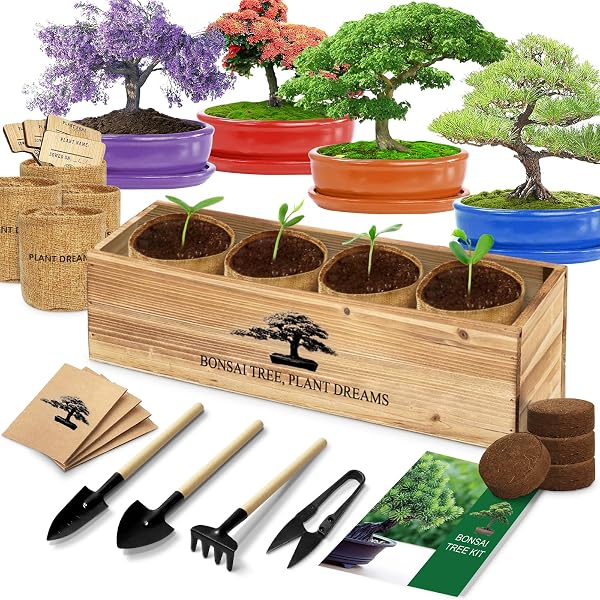
The set includes four seed packets (juniper, black pine, Japanese maple, wisteria), one glazed ceramic pot with drainage tray, a humidity dome, soil pellets, plant markers, pruning scissors, and a 40-page illustrated guide. As shown in the product image, the pot is substantial — about 5 inches across — and the dome fits snugly. That’s a meaningful step up from the flimsy plastic containers most starter kits ship with.
Real-world performance
I stratified the Japanese maple seeds per the guide’s instructions (30 days in the fridge), then planted everything in the included soil mix. The juniper sprouted first at 19 days; the wisteria took five weeks. The black pine, as of this writing, still hasn’t shown. That’s not a defect — pine seeds are notoriously finicky — but it’s worth knowing before you buy. The humidity dome did its job, maintaining consistent moisture without mold, which I’ve seen ruin cheaper kits.
The guide deserves specific praise. It walks through cold stratification, soil pH, wiring technique, and seasonal care with clear diagrams. One buyer noted, “The instructions actually made sense — I’ve bought two other kits that just said ‘plant and water.’” That matches my experience.
What buyers consistently praise
The species variety is the standout feature across reviews. “Having four trees to try means something will eventually sprout,” one verified purchaser wrote. Another praised the pot: “The ceramic one is actually reusable — I’ve repotted my surviving maple into it.” The packaging also gets consistent mentions for gift-worthiness.
Where it falls short
Honesty requires naming the downsides. First, germination is genuinely slow and uneven — this is a patience hobby, not a weekend project. Several reviewers reported zero sprouts from the pine seeds specifically. Second, the included scissors are decorative, not functional; they’ll crush delicate roots instead of cutting them. Third, there’s no grow light, so if you’re not near a south-facing window, your seedlings will stretch and weaken. These aren’t deal-breakers, but they’re real costs to factor in.
Who should buy this
This kit is ideal for three people: the gift-giver shopping for a plant-curious friend, the beginner who wants to learn without a $200 tree investment, and the hobbyist who enjoys the process more than the payoff. Skip it if you want a houseplant that looks good in three months — that’s not what bonsai is. Also skip it if you’re in a low-light apartment without a sunny window.
FAQ
How long until I have a “bonsai”? Three to five years of training before it looks like a miniature tree. The kit gets you started; it doesn’t fast-forward the art.
Can I grow these indoors? Juniper and pine prefer outdoor conditions with winter dormancy. Japanese maple and wisteria can live indoors with bright light and cool nights.
What’s the hardest part? Keeping seedlings alive past the first year. Overwatering kills more beginners than anything else — let the top inch of soil dry before watering.
The Verdict
Buy it if you want a genuine bonsai education with multiple species to experiment with, and you’re patient enough to wait weeks for sprouts. The ceramic pot and quality guide justify the price alone.
Skip it if you need instant gratification, live in a windowless apartment, or expect every seed to germinate. Bonsai rewards persistence, not enthusiasm.
Rating: 4.2/5 — A solid, honest starter kit that respects your intelligence and your time, held back only by slow germination rates and a useless pair of scissors.
Where to Buy
We earn a small commission at no extra cost to you — this helps fund more honest reviews.
Last updated: 2026-08-06. Ratings and prices current as of review date. Verify on Amazon before purchasing.
More Patio, Lawn & Garden Verdicts