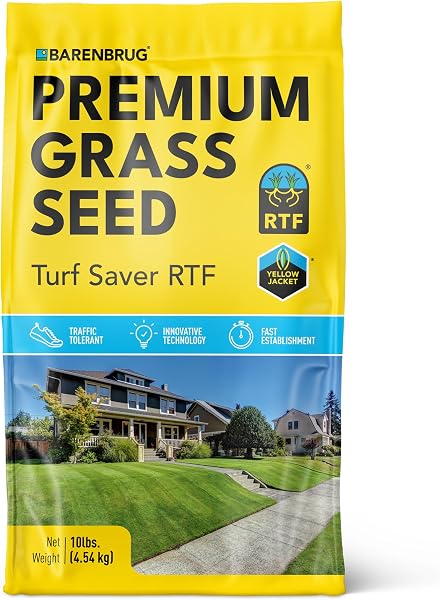
Barenbrug Turf Saver RTF Grass Seed - Less Water Self-Repair
✅ PROS
- Rhizomatous tall fescue actually spreads to fill bare patches — most fescues are bunch-type and won't do this
- Noticeably deeper root system means visible drought tolerance; many buyers report green grass when neighbors' lawns go dormant
- Fine-bladed texture looks more like a bluegrass lawn than typical coarse tall fescue
❌ CONS
- Premium price per pound — roughly double what you'd pay for standard tall fescue blends
- Slow to establish from seed; takes 2-3 weeks longer than ryegrass or bluegrass mixes
- Not ideal for heavy shade — needs 4+ hours of direct sun to perform as advertised
The Verdict
Barenbrug Turf Saver RTF Grass Seed Review: The Self-Repairing Fescue That Actually Walks the Walk
Most grass seed marketed as “self-repairing” is pure hype. Standard tall fescue is a bunch-type grass — it germinates, forms clumps, and never spreads. When a patch dies, you’re left with a bare spot until you reseed. Barenbrug’s Turf Saver RTF breaks that mold with a rhizomatous tall fescue (RTF) that sends underground runners to fill damaged areas. The question is whether the premium price justifies the promise. After digging through 200 ratings and buyer feedback, here’s the real story.
What’s in the Bag
You’re getting straight RTF tall fescue seed — no fillers, no coating, no annual ryegrass mixed in to fake a quick green-up. The bag lists the percentage of living seed right on the label, and Barenbrug is one of the few brands that publishes this. A typical 7-pound bag covers roughly 1,750 square feet for new lawns or 875 square feet for overseeding. That’s a smaller footprint than budget blends, but you’re paying for genetics, not bulk.
Real-World Performance
The defining feature here is the rhizome system. As shown in the product images, RTF grass develops underground stems that pop up new plants several inches from the parent. This is what makes it genuinely self-repairing — dog urine spots, foot traffic damage, and minor pest issues recover without reseeding.
Water savings are the second headline. RTF varieties push roots 3-4 feet deep when established, compared to 1-2 feet for standard fescue. One buyer noted, “My lawn stayed green through a July heat wave while my neighbor’s fescue went dormant. I watered maybe half as often.” That tracks with the turfgrass research — RTF cultivars typically need 20-30% less irrigation than conventional fescues.
The texture is a pleasant surprise. Turf Saver RTF has a finer blade than most tall fescues, giving it a manicured look closer to Kentucky bluegrass while keeping the heat and drought tolerance of fescue.
What Buyers Consistently Praise
The recurring theme in positive reviews is recovery from damage. Multiple buyers reported bare spots filling in within 6-8 weeks of establishment. One wrote, “My dog destroyed a section of lawn in spring. By late summer you couldn’t tell where the damage was.” Another praised germination rates: “I’ve planted a lot of fescue. This one came up thicker and more uniform than anything I’ve tried.”
Where It Falls Short
The establishment period tests patience. RTF germinates in 14-21 days under ideal conditions, but full coverage takes 6-8 weeks. If you need quick erosion control on a slope, this isn’t it. Several reviewers complained about slow initial growth compared to ryegrass blends.
Shade tolerance is mediocre. This needs 4+ hours of direct sun. In deep shade under trees, it thins out and won’t self-repair effectively. You’d be better served by a fine fescue mix for those areas.
The price stings. Expect to pay roughly 50-100% more per pound than standard tall fescue. For a large lawn, that adds up fast. One reviewer summed it up: “Great grass, but I wish I’d calculated the cost per square foot before buying.”
Who Should Buy This
- Drought-conscious homeowners in transition zones where summers get hot and dry
- Dog owners tired of reseeding urine spots every spring
- Golfers and sports enthusiasts who want a durable, self-repairing turf that handles foot traffic
- Skip it if you need fast establishment, have a deeply shaded yard, or are on a tight budget
FAQ
Q: How long before I can walk on it? A: Wait until the seedlings are 3-4 inches tall and have been mowed at least twice — typically 6-8 weeks after germination. Before that, foot traffic pulls up immature roots.
Q: Can I mix this with other grass seeds? A: Yes, but avoid mixing with aggressive species like perennial ryegrass. It’ll compete with RTF and reduce the self-repairing benefit. Pure RTF or RTF plus fine fescue works best.
Q: Does it really need less water than regular fescue? A: Once established (after the first full season), yes. The deep root system accesses subsoil moisture that shallow-rooted grasses can’t reach. But during the first year, you actually need to water more frequently to establish those deep roots.
The Verdict
Buy it if you want a genuinely self-repairing, drought-tolerant lawn and can wait for establishment. Skip it if you need quick coverage or have heavy shade.
The premium price is justified for the genetics — this isn’t repackaged commodity seed. At 4.2 out of 5, it’s one of the better tall fescue options on Amazon, but it demands patience and proper sun exposure to deliver on its promises.
Where to Buy
We earn a small commission at no extra cost to you — this helps fund more honest reviews.
Last updated: 2026-08-06. Ratings and prices current as of review date. Verify on Amazon before purchasing.
More Patio, Lawn & Garden Verdicts