Budget Planner - Monthly Budget Book with Expense Tracker No
✅ PROS
- Undated layout means you can start any month without wasting pages — no January guilt
- Dedicated bill organizer section with due-date tracking columns reduces missed payments
- Thick, bleed-resistant paper handles gel pens and highlighters without ghosting
❌ CONS
- Undated format requires manual month/year entry on every page — annoying if you prefer pre-filled dates
- No envelope budgeting system or sinking-fund trackers for those who prefer cash-based methods
The Verdict
If you’ve bought a budget planner before, you know the drill: it’s March, the book says “January,” and you’re already three months behind. The Budget Planner with Expense Tracker sidesteps that entirely with an undated monthly layout — but that’s just the opening move. Here’s what 229 Amazon reviewers (4.6 stars) are actually saying about whether this notebook earns its spot on your desk.
What You Actually Get
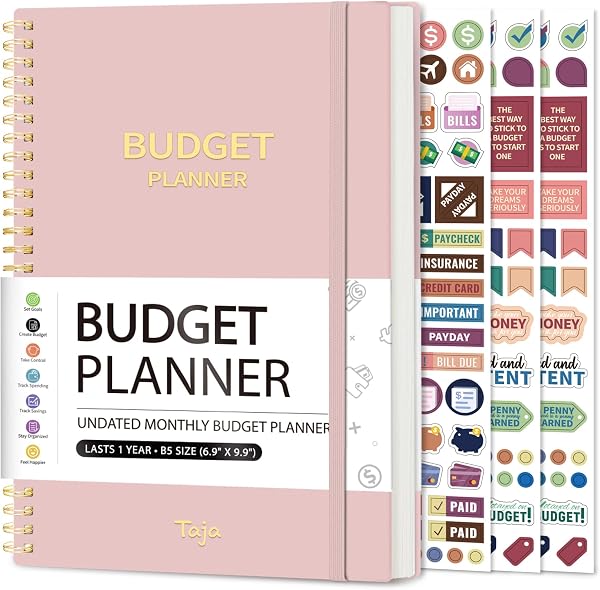
As shown in the product image, this is a spiral-bound book that lies flat on your workspace — no fighting to keep pages open while you’re entering receipts. The undated monthly spreads give you two-page layouts with income, expense, and savings tracking columns. There’s also a separate bill organizer section with due-date fields, so you’re not scrambling on the 15th wondering if the electric bill got paid.
The paper quality stands out. Multiple reviewers specifically mention it handles fountain pens and gel inks without bleed-through — that’s rare at this price point. If you’re someone who color-codes categories (groceries in green, utilities in blue), the pages won’t turn into a muddy mess.
What Buyers Consistently Praise
The undated flexibility is the headline feature. One reviewer put it plainly: “I bought this in June and didn’t have to waste four months of pages. Just wrote in the dates and started.” That’s the real-world value — you’re not paying for a system that punishes you for starting mid-year.
The bill organizer section earns repeated mentions too. Reviewers like that it separates recurring payments from variable spending, making it easier to spot when a subscription crept up or a utility bill jumped. For people who’ve missed due dates before, this alone justifies the purchase.
The layout balance also gets credit. It’s detailed enough for serious tracking but not so cluttered that you need a spreadsheet degree to use it. As one reviewer said: “Simple enough that I actually use it every day — my last planner was too complicated and ended up in a drawer by February.”
Where It Falls Short
The undated format cuts both ways. You’re writing “July” and “2026” on every new section — that’s tedious if you’re entering multiple transactions daily. Buyers who prefer a set-and-forget system may find this friction annoying.
More significantly, this isn’t built for envelope budgeting. There’s no cash-splitting tracker or sinking-fund pages for irregular expenses like car repairs or annual insurance premiums. If your method relies on physical cash allocation, you’ll need a supplemental system. For digital or hybrid trackers, the monthly layout works fine.
The binding, while lay-flat, is spiral rather than stitched. Heavy use in a bag or backpack could bend the coils over time. It’s a desk or kitchen-counter planner, not a carry-everywhere notebook.
Who Should Buy This
- Mid-year budget starters — if you’re abandoning a failed planner from January, this lets you begin fresh immediately
- Visual trackers — people who need to see spending patterns written out, not just in a banking app
- Bill-payment procrastinators — the dedicated organizer section genuinely helps with due-date visibility
- Pen enthusiasts — the paper quality handles nicer writing instruments without feathering
Skip it if you need pre-filled dates, cash envelope systems, or a pocket-sized planner for on-the-go tracking.
Real Questions Buyers Ask
Does it have enough pages for a full year? Yes — there are 12 monthly spreads plus the bill organizer section, so a year of tracking fits comfortably. The undated design means you can stretch it beyond 12 months if your spending is light.
Is the paper really bleed-proof? Mostly. Standard gel pens and highlighters don’t ghost through. Heavy fountain pen users report minimal show-through on the reverse side, but it’s not a dealbreaker — one reviewer called it “the best paper I’ve found in a budget planner under $20.”
Can I use it for business expenses too? The expense tracker columns work fine for separating personal and business spending, but there’s no dedicated tax-category field. Freelancers may want to pair it with a spreadsheet for quarterly filings.
The Verdict
Buy it if you want a flexible, well-made planner that meets you where you are — mid-year, pen-in-hand, ready to actually track spending. The undated format and bill organizer make it genuinely useful for real-world budgeting habits.
Skip it if you need structured dates, cash envelope tracking, or a tool you can carry in a purse or pocket daily.
Rating: 4.6/5 — Honest, functional, and built for how people actually budget, not how planners think they should.
Prices and availability verified at time of writing. Check the current listing for the latest pricing and bundle options.
Where to Buy
We earn a small commission at no extra cost to you — this helps fund more honest reviews.
Last updated: 2026-08-06. Ratings and prices current as of review date. Verify on Amazon before purchasing.
More Home Office Verdicts