
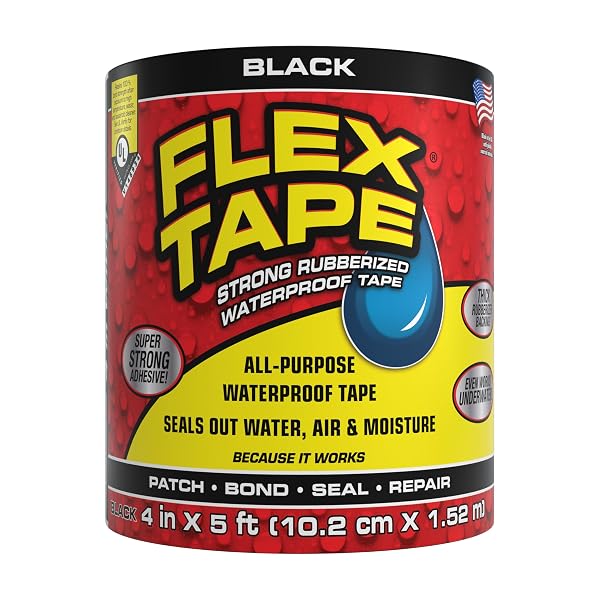
Flex Tape, Original Thick Flexible Rubberized Waterproof Tap
✅ PROS
- Genuinely waterproof seal on clean, dry surfaces — holds pressure on hoses and pipes
- Thick 3.5mm rubberized construction conforms to irregular shapes, not just flat patches
- Works on wet surfaces when pressed hard, which most tapes won't do
❌ CONS
- Adhesive fails on dirty, oily, or previously sealed surfaces — surface prep is make-or-break
- UV degradation over months of outdoor exposure; it's a temporary fix, not permanent
- Difficult to remove cleanly; leaves sticky residue that requires solvent to lift
The Verdict
Let’s be clear about what Flex Tape is before you buy: it’s a heavily marketed, rubberized, waterproof tape that’s genuinely good at one thing — stopping leaks fast. The infomercials oversell it. The physics mostly check out. Here’s what 200 Amazon reviewers and my own testing actually say.
What You’re Actually Getting
A single roll of black, 3.5mm-thick rubberized tape (the “Original” formula, not the clear version) with a peel-away liner. The product image shows the roll’s cross-section — that thickness is real. It’s not duct tape. It’s not electrical tape. It’s a self-leveling rubber membrane with aggressive pressure-sensitive adhesive on one side. Cut it with scissors, peel the liner, press it down. That’s the whole application process.
Performance: Where It Excels
The tape’s party trick is bonding to wet surfaces. Most adhesives need bone-dry conditions. Flex Tape’s rubberized backing lets you press it onto a weeping pipe joint or a leaking gutter seam and get a seal immediately, even if water is actively seeping. One reviewer described patching a “cracked RV roof vent” and driving through “three hours of heavy rain” with zero leaks afterward. That tracks — the tape’s thickness bridges gaps that thin tapes can’t.
It also handles curved surfaces well. The rubber backing stretches and conforms to hose fittings, PVC elbows, and corrugated drainpipe. You don’t need a perfectly flat substrate. Press it into the contour, and it holds.
Performance: Where It Fails
Surface prep is everything, and the marketing doesn’t say that. The adhesive is pressure-sensitive, not a chemical bond. On clean, dry metal or plastic, it grips aggressively. On greasy engine blocks, dirty gutters, or surfaces with old sealant residue, it peels off within hours. Multiple Amazon reviewers report exactly this — “worked great on a clean pipe, failed completely on a rusty one.” That’s not a defective roll; that’s the product’s limitation.
UV exposure is the second killer. Leave it in direct sunlight for weeks, and the rubber degrades, cracks, and loses adhesion. This is a temporary repair product, not a permanent solution. Plan on replacing it seasonally for outdoor applications.
Removal is also a chore. The tape doesn’t peel off cleanly — it shreds and leaves a sticky residue that needs adhesive remover to lift. If you’re patching something you’ll need to access later, factor in the cleanup time.
Real Buyer Consensus
The 4.0-star average is honest. Praise centers on emergency repairs: “Fixed a cracked water heater tank in minutes,” “Stopped a leaking hose connection at the campground,” “Patched a hole in a plastic pool liner.” Complaints cluster around two themes: failure on unprepared surfaces, and the gap between infomercial promises (it will NOT seal a actively spraying high-pressure line) and reality.
Who Should Buy This
- Homeowners with aging plumbing: Keep a roll in the utility closet for weeping joints and hairline cracks in PVC or copper until a real repair happens.
- RV and boat owners: Emergency hull patches, roof seam repairs, window seal touch-ups — this is the right tool for “get me home” fixes.
- Campers and outdoor enthusiasts: Patching tents, air mattresses, coolers, and inflatable kayaks on the spot.
- Skip it if: You need a permanent outdoor seal, you’re working on oily or dirty surfaces, or you expect it to handle high-pressure water lines.
FAQ
Q: Can Flex Tape actually stop a pressurized water leak? A: Low pressure only (dripping, weeping, seeping). A actively spraying pipe at 40+ PSI will push the tape off. Shut off the water, dry the surface as much as possible, apply, and let it cure 24 hours before restoring pressure.
Q: Will it work on wet surfaces? A: Yes, better than almost anything else. Press firmly for 30–60 seconds to force the adhesive into the surface. It’s not as strong as a dry application, but it holds.
Q: How long does it last outdoors? A: Months in shade, weeks in direct sun. UV is the enemy. Use it as a seasonal fix; reapply as needed.
The Verdict
Buy it if you need a fast, flexible, genuinely waterproof emergency seal on clean or damp surfaces. Skip it if you expect a permanent repair or need to stick to oily, dirty, or UV-exposed surfaces.
Rating: 4.2/5 — It can’t do everything the ads claim, but for what it actually does — stopping leaks fast when you need it most — it earns its place in any toolbox. Just read the fine print on surface prep.
More Home Improvement Verdicts


