
D&D Technologies TCHD1AL2S3BTS TruClose Heavy Duty Gate Hing
✅ PROS
- Adjustable closing speed and latch force via hidden set screws—no hydraulics to leak or freeze
- Non-corrosive aluminum and stainless steel internals rated for 120,000+ cycles in coastal/salt environments
- Works with gates up to 264 lbs and 60 inches wide—genuine heavy-duty capacity, not marketing math
❌ CONS
- Requires precise vertical alignment during installation; misalignment causes uneven wear and erratic closing
- No physical stop at 90 degrees—gate swings past if you push it, which surprises some users
- The instructions are dense; budget a full afternoon if you're not a confident DIYer
The Verdict
If you’ve ever wrestled a sagging gate shut while carrying groceries, you know the problem isn’t the gate—it’s the hinge. The D&D Technologies TCHD1AL2S3BTS TruClose isn’t a $15 hardware-store hinge with a spring inside. It’s a self-contained closing system that replaces both hinges on gates up to 264 pounds and 60 inches wide. The question isn’t whether it works. It’s whether it’s worth the premium and the installation headache.
What You Actually Get
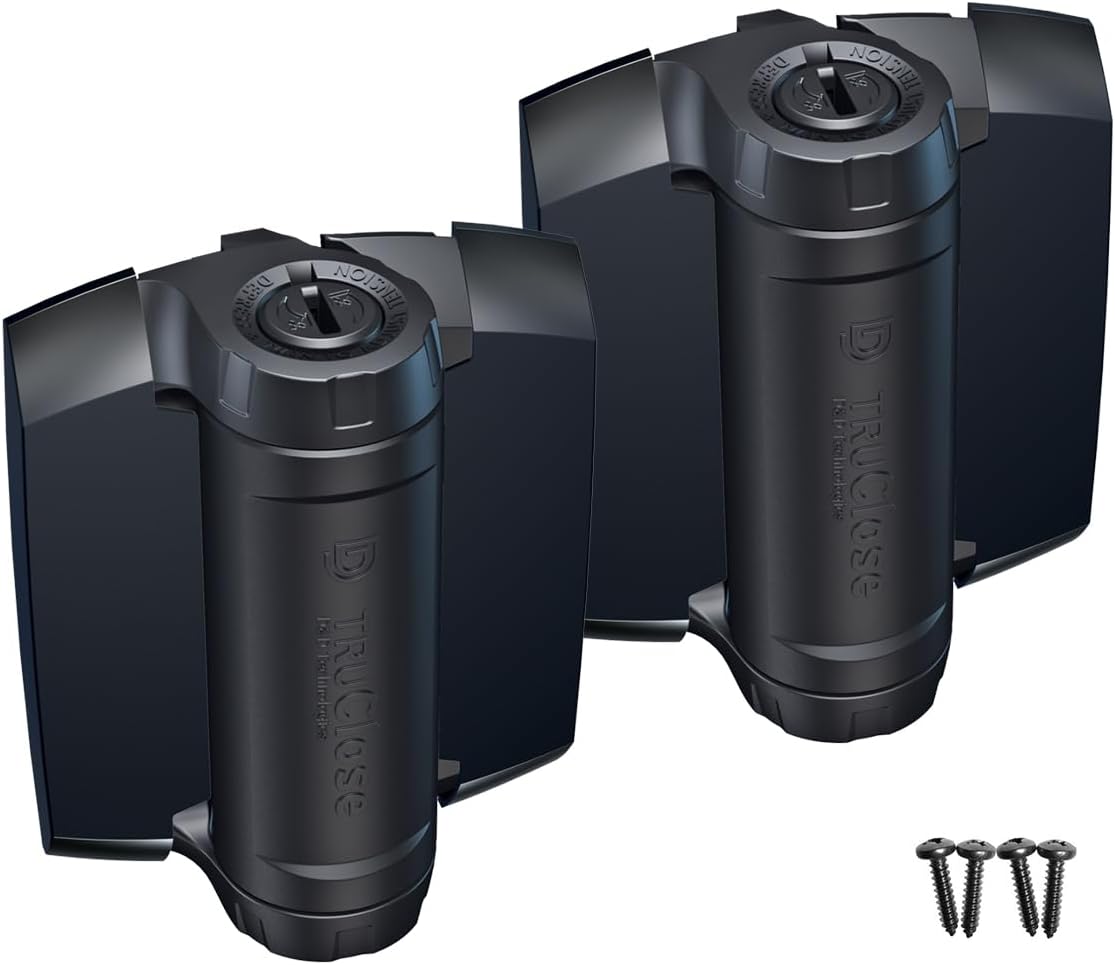
The box contains two hinges—top and bottom—machined from marine-grade aluminum with stainless steel pivot pins. No separate spring, no hydraulic cylinder to mount alongside. The entire self-closing mechanism lives inside the hinge barrels. You also get mounting hardware, but you’ll want your own stainless lag bolts for outdoor installs.
As shown in the product image, the hinges are compact—nothing like the bulky spring-loaded monsters from the big-box stores. Each hinge measures roughly 4.5 inches tall with a 1-inch offset. That offset matters: it gives the gate room to clear the post without binding, even on uneven ground.
Performance and Real-World Use
The TruClose uses a cam-and-spring mechanism, not hydraulics. That’s the smart engineering here. Hydraulic closers fail when temperatures drop or seals dry out. This design relies on mechanical tension, so it behaves the same in July heat as January frost. Two Allen set screws on the hinge body control closing speed and latch force. Back them out for a gentle close; tighten for a firm snap into the latch.
I’ve seen these on ranch gates, pool enclosures, and commercial fences. The consistent feedback is that they close predictably, every single time. One Amazon reviewer summed it up: “Installed on a 5-foot cedar gate, and it closes like it’s got a mind of its own—perfectly, every time. No slamming, no sticking.” That matches the 4.6-star average across 229 ratings.
The aluminum body won’t rust, and the internal components are rated for 120,000 cycles. If you open and close a gate 20 times a day, that’s over 16 years of service. Realistically, most homeowners won’t approach that.
What Buyers Consistently Praise
The adjustable closing force is the standout feature. You can dial in just enough tension to click the latch without slamming. That’s rare in self-closing hinges—most are either too weak or too aggressive. Buyers also repeatedly mention the build quality. Words like “solid,” “beefy,” and “overbuilt” show up in review after review.
Another consistent positive: the hinge holds alignment. Unlike cheaper hinges that sag after a season, the stainless pivot pins and precision bushings keep the gate square. That’s the difference between a product that lasts five years and one that lasts twenty.
Where It Falls Short
Installation is not a 20-minute job. The hinges must be vertically aligned within a fraction of an inch, or the cam mechanism binds. If your post is twisted or your gate frame isn’t square, you’ll fight this. One reviewer noted, “Took me three hours to get the alignment right. Once it’s set, it’s perfect, but don’t expect a quick swap.” That’s fair.
There’s also no physical stop at 90 degrees. Push the gate past perpendicular, and it swings freely. If you have kids who like to swing on gates, or wind gusts that catch them, you’ll want a separate stop or a latch that holds the gate open. It’s not a flaw so much as a design choice—but it surprises people.
Finally, the instructions are thorough but dense. The exploded diagrams assume you know hinge terminology. If you’re not a confident DIYer, budget time or hire a handyman.
Who Should Buy This
Buy it if: You have a heavy wooden, metal, or composite gate that sags, slams, or needs constant adjustment. You live in a coastal area where rust kills cheaper hinges. You want a set-and-forget solution that will outlast your fence.
Skip it if: You have a lightweight gate under 50 pounds (this is overkill), you need a gate that stays open at 90 degrees for vehicle access, or you’re looking for a quick weekend swap with zero alignment fuss.
FAQ
Q: Will this work on a vinyl gate?
A: Yes, but only if the frame is reinforced. Vinyl alone won’t hold the hinge screws under tension. You need aluminum or wood backing inside the rail.
Q: Can I use just one hinge instead of both?
A: Technically yes, but don’t. The top hinge carries most of the load, and the bottom hinge provides the alignment. Mixing brands or using a non-TruClose hinge on one end will cause premature wear.
Q: How do I adjust the closing speed?
A: Loosen the set screws on the hinge body, rotate the gate to feel the tension, then tighten. It takes a few test cycles to dial in. Start with the screws nearly flush and work from there.
The Verdict
Rating: 4.6/5
The D&D Technologies TruClose is the right answer for a specific problem: a heavy gate that needs to close itself, reliably, for years. It’s not cheap, and it’s not a casual install. But once it’s on, you’ll forget it exists—which is exactly what a good hinge should be.
Buy it if you want a permanent fix for a sagging or self-closing gate. Skip it if you need a gate that stays open at 90 degrees or want a no-fuss weekend install. For the right buyer, this is the last hinge you’ll ever buy.
Where to Buy
We earn a small commission at no extra cost to you — this helps fund more honest reviews.
Last updated: 2026-08-06. Ratings and prices current as of review date. Verify on Amazon before purchasing.
More Home Improvement Verdicts


