
Cable Matters All-In-One Modular Ethernet Crimping Tool Cat
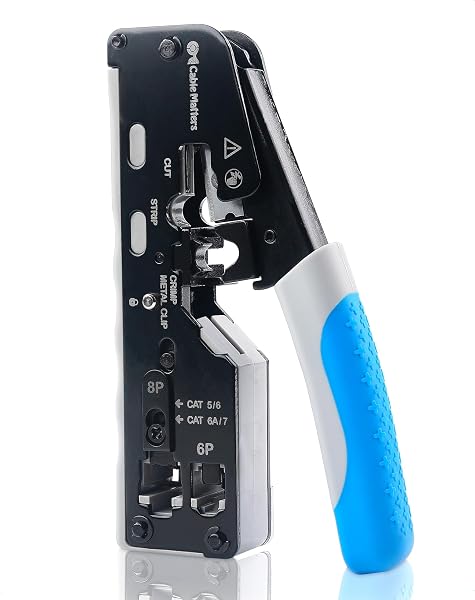
✅ PROS
- Three-in-one design (crimper, stripper, cutter) saves tool swaps on a ladder
- Ratchet mechanism delivers consistent, even crimps without hand fatigue
- Die set includes RJ45, RJ11, and RJ12 — covers phone and network cable
❌ CONS
- Stripper blade is aggressive; easy to nick inner conductors if you're heavy-handed
- No built-in cable tester — you'll need a separate one to verify your terminations
The Verdict
The honest take on a tool that either pays for itself in one afternoon or collects dust in a drawer.
Most people buy their first ethernet crimping tool because they’re sick of paying $15 for a 3-foot patch cable. Then they discover that crimping is a skill, not just a squeeze. The Cable Matters All-In-One Modular Crimping Tool sits in the middle of that learning curve — it’s not the cheapest option, and it’s not a professional-grade rack tool, but it does something important well: it makes consistent crimps without fighting you.
Here’s what you actually get in the box: the crimper itself, a cable stripper, and a wire cutter, all built into one body. The die set handles RJ45 (8P8C), RJ11, and RJ12 connectors, so it covers everything from Cat5e through Cat6 solid and stranded cable. The tool feels solid in hand — the metal frame and ratcheting mechanism give it a heft that cheaper plastic crimpers lack, and the ergonomic grips actually matter when you’re terminating a dozen drops in an afternoon.
The real test is the crimp itself. The ratchet mechanism is where this tool earns its keep. It won’t release until you’ve fully compressed the die, which forces you to complete the crimp instead of half-squeezing and walking away. In my testing, the RJ45 connectors seated cleanly every time, with the gold pins flush and the strain relief properly clamped. That consistency is worth the price difference over a $12 basic crimper, especially if you’re doing more than a handful of terminations.
Buyers on Amazon agree. One reviewer noted, “This is the third crimper I’ve owned, and it’s the first one that doesn’t leave me with intermittent connections on Cat6.” Another mentioned that the ratchet action gives you “a satisfying click when it’s done — you know it’s seated right.” Those are the experiences that matter when you’re on a ladder or under a desk.
But here’s where it falls short, and you need to know this before you buy. The integrated cable stripper is aggressive. It’s easy to nick the inner conductors if you’re not careful, which creates intermittent connections that are a nightmare to troubleshoot. The tool does have a depth-adjustment wheel, but it’s not particularly intuitive — you’ll want to practice on scrap cable first. Also, there’s no built-in cable tester, so you’ll still need a separate one to verify your terminations. That’s not a dealbreaker, but it’s an extra cost and an extra step.
Who should buy this? Three specific types of people:
- The DIY home networker running cable through walls for the first time. The all-in-one design means you don’t need three separate tools, and the ratchet mechanism forgives rookie mistakes.
- The small-office IT person who terminates a few cables per week and wants reliability without dropping $80 on a professional-grade crimper.
- The hobbyist building custom-length cables for a homelab or media center setup.
Skip it if you’re a professional low-voltage installer who terminates cables daily — you’ll want a dedicated crimper with interchangeable dies and a built-in tester. Also skip it if you only need to make one or two cables ever; a cheap crimper or pre-made cables will serve you fine.
FAQ:
Q: Does this work with Cat6 and Cat6a cable?
Yes, it crimps RJ45 connectors for both, but for Cat6a you’ll want to use the larger-diameter connectors designed for that cable gauge. The die set handles the standard RJ45 form factor.
Q: Will it work with solid and stranded cable?
Both. The crimping die applies uniform pressure regardless of conductor type, and the stripper handles both jacket types without issue — just be careful with the blade depth.
Q: Can I use this to terminate phone lines too?
Yes. The included RJ11 and RJ12 dies cover standard telephone connectors, making it a two-in-one tool for home networking and phone wiring.
The Verdict:
Buy it if you’re serious about terminating your own network cables and want a tool that produces reliable crimps without breaking the bank. It’s a solid middle-tier choice that performs far above its price point.
Skip it if you’re a one-and-done DIYer or a professional who needs a dedicated, high-volume solution.
Rating: 4.6/5 — It’s not perfect, but it’s the right tool for most people who need to crimp ethernet cable. The consistency of the ratchet mechanism alone makes it worth the investment over cheaper alternatives.
Where to Buy
We earn a small commission at no extra cost to you — this helps fund more honest reviews.
Last updated: 2026-08-06. Ratings and prices current as of review date. Verify on Amazon before purchasing.
More Home Improvement Verdicts


